


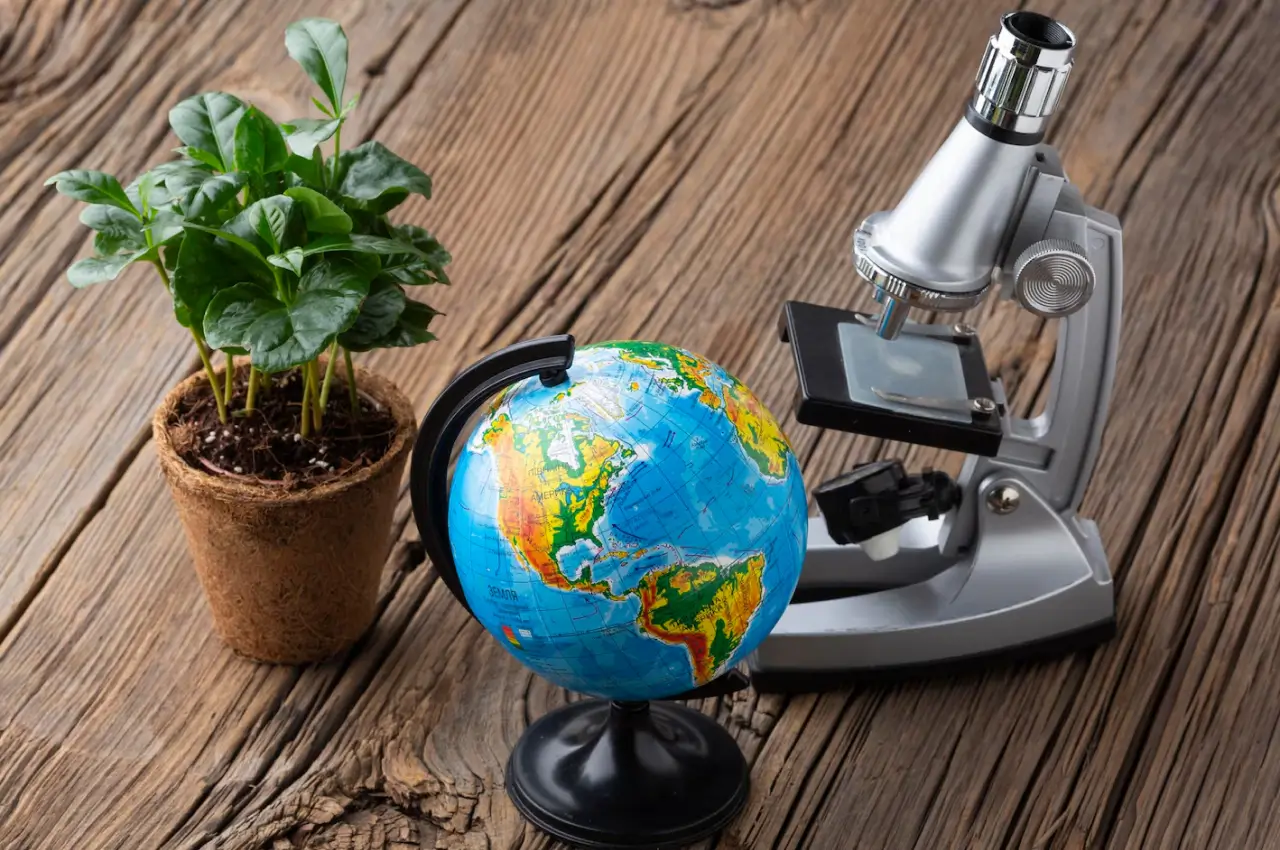
Scientists around the world continue to study how the planet is changing and how natural systems respond to shifts in climate, ecosystems, oceans, and human activity. New research is helping researchers better understand these complex processes and improve the way environmental changes are measured.
The Earth is a connected system. Changes in one part of the environment can influence other systems, making long-term observation and research essential for understanding what is happening.
Understanding environmental change begins with reliable observations, careful research, and long-term scientific monitoring.
A Planet Under Constant Observation
Scientists use satellites, sensors, research stations, ocean measurements, and field studies to monitor changes across the planet. These tools allow researchers to collect information from environments that can be difficult to observe directly.
Long-term datasets are particularly valuable because they allow scientists to compare conditions over time and identify patterns that may not be visible from short-term observations.
Researchers monitor areas such as:
- Ocean temperatures
- Atmospheric conditions
- Ice coverage
- Forest ecosystems
- Wildlife populations
- Soil conditions
- Sea levels
Combining information from these different areas can provide a broader understanding of environmental systems.
Understanding Changes in the Oceans
The world’s oceans play an important role in the Earth’s climate system. They absorb and distribute large amounts of heat and interact continuously with the atmosphere.
Scientists study ocean temperatures, currents, chemistry, and biological activity to understand how marine environments are changing.
Ocean research can also provide important information about marine ecosystems and the species that depend on them.
Technology Is Transforming Scientific Research
Modern technology is allowing scientists to collect and process information at a scale that was previously difficult to achieve.
Satellites can observe large areas of the Earth’s surface, while automated sensors can continuously collect measurements from remote environments. Advances in computing also allow researchers to process large datasets and identify patterns more efficiently.
| Technology | Scientific Application |
|---|---|
| Satellites | Monitoring large geographic areas |
| Sensors | Collecting continuous measurements |
| Research stations | Long-term environmental monitoring |
| Computer models | Studying complex systems |
| Field research | Direct observation and sampling |
These technologies do not replace traditional scientific research. Instead, they provide additional tools that researchers can use alongside laboratory experiments and field studies.
Changes in Ecosystems
Ecosystems are influenced by temperature, rainfall, water availability, land use, and interactions between species. When environmental conditions change, plants and animals may respond in different ways.
Scientists study these responses to understand how ecosystems function and how changes can affect biodiversity.
Long-term research is particularly important because ecosystems can respond gradually. A change that appears small over a short period may become more significant when observed across many years.
Environmental research is often about identifying patterns over time rather than interpreting a single observation.
The Role of Data
Reliable environmental research depends on accurate data. Scientists need measurements that can be compared across locations and time periods.
Researchers also need to account for uncertainty and differences in measurement methods. Careful analysis helps distinguish genuine changes from temporary variations or incomplete observations.
This is why scientific monitoring often involves multiple independent measurements rather than relying on a single source of information.
Why Long-Term Research Matters
Environmental systems can be complicated, and many processes take years or decades to become fully understood. Continued research allows scientists to refine existing models and test earlier findings against new observations.
Long-term research can also help policymakers, businesses, and communities understand potential environmental risks and evaluate possible responses.
Several areas remain important for future research:
- Climate systems and interactions between the atmosphere and oceans.
- Biodiversity and changes in ecosystems.
- Water resources and changing patterns of availability.
- Environmental monitoring through satellites and sensors.
- Scientific modeling to better understand complex systems.
The continued development of scientific tools is providing researchers with more detailed information about the planet. As new observations become available, scientists can improve their understanding of environmental processes and develop more accurate ways to monitor changes over time.